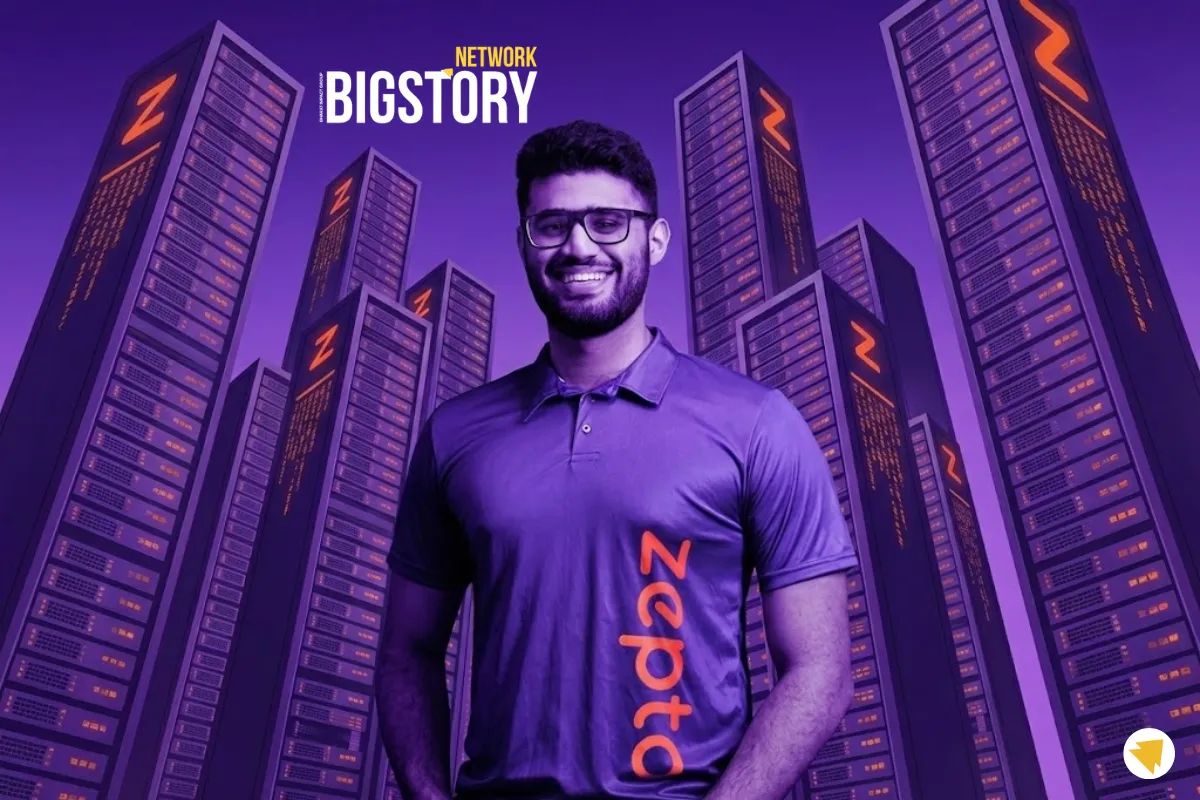
From a failed restaurant chain to Shark Tank India. Read how Viraj Bahl sold his home to start Veeba, conquered the FMCG market, and built a ₹1,000 crore brand.
 Rashmeet Kaur Chawla
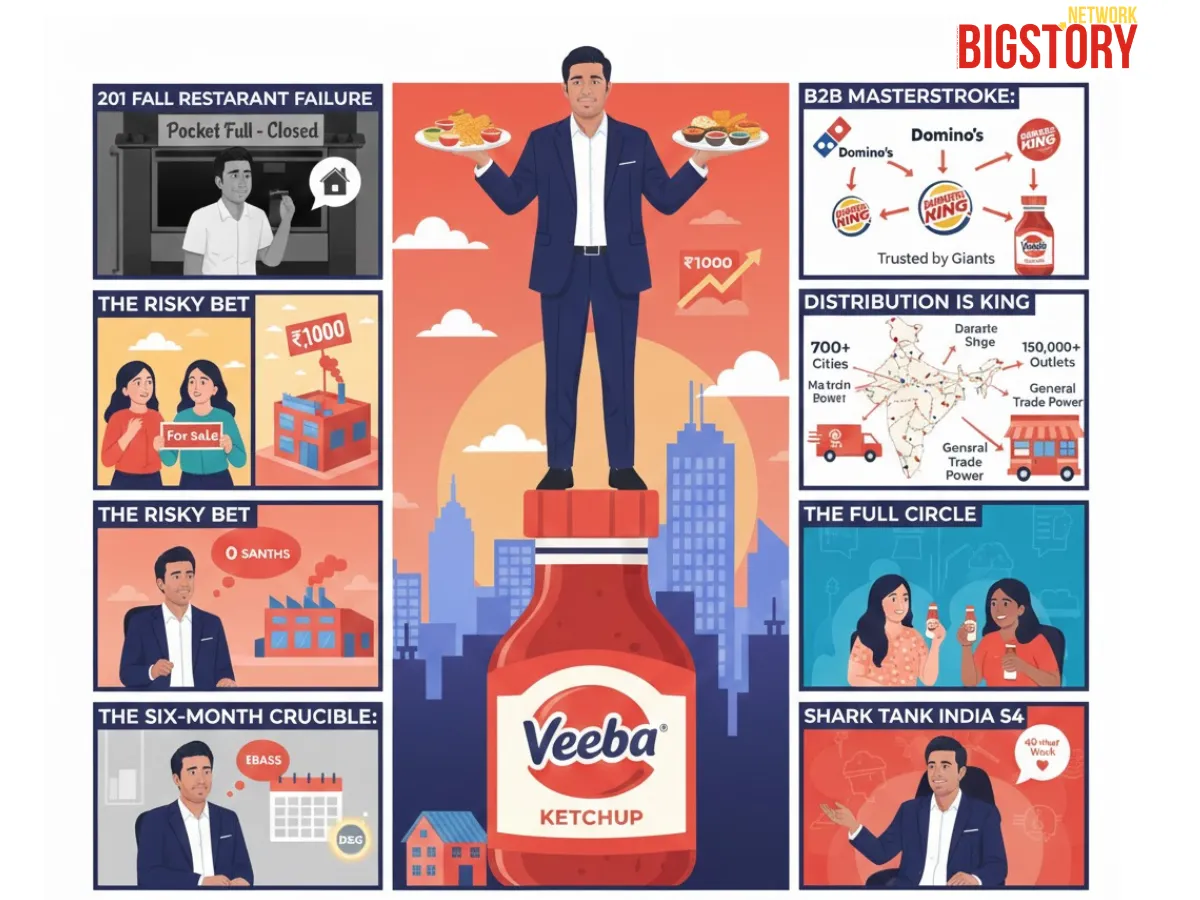
You've just closed the sixth and final outlet of your restaurant chain. Your father sold the family business against your wishes. You're financially devastated, emotionally drained, and everyone around you whispers about your failure.
Now imagine making the most audacious decision of your life—selling your family home to start all over again in the same industry that just destroyed you.
This isn't a hypothetical nightmare. This was Viraj Bahl's reality in 2013.
Today, that ₹50 lakh from his house sale has transformed into Veeba, India's leading sauce and condiment brand with revenues exceeding ₹1,000 crores, present in over 700 cities across 150,000+ retail outlets. But between that rock-bottom moment and billion-rupee success lies a story that challenges everything we think we know about entrepreneurship, failure, and the price of dreams.
Viraj Bahl's journey isn't just another rags-to-riches tale. It's a masterclass in converting public humiliation into private triumph, in extracting wisdom from wounds, and in understanding that sometimes the best thing that can happen to you is watching everything fall apart.
By 2013, Viraj Bahl faced not one, not two, but three devastating blows that would have permanently ended most entrepreneurial careers:
The Forced Exit: In 2008, despite Viraj's fierce opposition, his father Rajiv Bahl sold Fun Foods—the family business Viraj had transformed into a household name over six years—to German giant Dr. Oetker for ₹110 crores. Imagine pouring your heart into building something, only to have it ripped away against your will. The sale was financially lucrative but emotionally catastrophic, leaving Viraj at a painful crossroads.
The Public Failure: Armed with his share from the Fun Foods sale and burning with passion for the food industry, Viraj launched "Pocket Full" in 2009—an ambitious quick-service restaurant chain concept. By 2013, after investing everything he had and more, all six outlets had shuttered. As Viraj himself described it, "Restaurants are quite a naked business where empty establishments make failure publicly visible to friends and family." The shame wasn't private; it was on display for everyone to witness.
The Financial Devastation: Four years of mounting losses, zero customers walking through doors, and the weight of family pressure questioning every decision. At his lowest point, Viraj was being told by everyone around him to quit chasing impossible dreams.
The Cruel Irony?
He was passionate about food, understood the industry from working at Fun Foods, and had proven business acumen. Yet nothing was working. The problem wasn't lack of knowledge or effort—it was something deeper. Viraj was about to discover what separates those who rebuild from those who surrender.
The Core Belief: Failure Is the Curriculum, Not the Conclusion
What separates Viraj Bahl from countless entrepreneurs who fail and fade away? A single, unshakeable belief that would become the foundation of everything he built:
"The best thing happening to me was my restaurant business failing."
Not "despite my failure" or "in spite of setbacks"—but the failure itself was THE BEST THING. This wasn't motivational platitude or post-success revisionism. Viraj genuinely believed that his spectacular public failure at Pocket Full taught him the most valuable lessons of his entrepreneurial life.
From the ashes of those six closed restaurant outlets, Viraj extracted three core principles:
Frugality as Strategy: Empty restaurants taught him that every rupee matters. The lesson wasn't just about cutting costs—it was about making the right expense at the right time. This wisdom would later manifest in Veeba's controversial "loss-making by choice" strategy.
Timing Is Everything: Good ideas executed at the wrong time or with the wrong approach still fail. This insight shaped his decision to start Veeba as a B2B supplier to restaurant giants like Burger King, Domino's, and Pizza Hut—building credibility and cash flow before entering the brutal retail competition.
Belief isn't what you say during success; it's what you risk during failure.
Every great comeback story has a moment—a single decision where everything pivots. For Viraj Bahl, that moment came in 2013 when he sat with Ridhima and proposed something that sounded like madness:
"Let's sell our house and start again."
Think about the audacity of this decision. You've just failed publicly. Your family is questioning your judgment. You've burned through your inheritance from the Fun Foods sale. The rational choice—the safe choice—would be to find a job, rebuild savings, and protect what little security remains.
Instead, Viraj chose to bet everything on one more shot.
That ₹50 lakh from their house sale became the seed capital for Veeba, launched in Neemrana, Rajasthan. The brand name itself carried deep meaning—a tribute to Viraj's mother, Vibha Bahl—connecting his new venture to family roots while building something entirely his own.
But here's where the story shifts from desperate gamble to strategic genius:
The B2B Masterstroke: Unlike most consumer brands that rush to establish retail presence and brand visibility, Veeba didn't start as a consumer brand at all. Viraj made the counterintuitive choice to become a B2B supplier to Quick Service Restaurant giants. There were no flashy product launches or consumer advertising campaigns. Just Veeba, quietly manufacturing high-quality sauces for Burger King, Domino's, and Pizza Hut from an ISO 22000-certified facility.
Why did this matter? Because it solved multiple problems simultaneously:
The Six-Month Silence
But the shift wasn't immediate or smooth. After selling his house and starting Veeba, Viraj faced six months of zero sales. This was the crucible moment. The pressure from family was crushing. The voices of doubt weren't just external anymore—they were internal, questioning whether he'd made a catastrophic mistake.
The breakthrough came through Deepak Shahdadpuri and DSG Consumer Partners—Veeba's first institutional backer. This investment wasn't just capital; it was validation. Someone with experience and resources believed in Viraj's vision when he had six months of zero sales to show for his house-sale gamble.
With DSG's backing and strategic guidance, Veeba secured its transformative partnership with KFC. This single relationship became the catalyst that proved Viraj's B2B strategy wasn't just viable—it was brilliant.
The Retail Invasion
Only after establishing a rock-solid B2B foundation did Veeba enter retail. But when it did, it brought something competitors couldn't match—products already proven in professional kitchens, manufacturing excellence certified by international standards, and the strategic patience to do it right.
Veeba launched preservative-free ketchup and sugar-free variants targeting health-conscious Indian households. The positioning was clear: "Sauce is the unsung hero of the Indian industry," as Viraj articulated. While global brands focused on urban metros, Veeba applied Viraj's hard-won lesson from Fun Foods—distribution is king.
The shift from failed restaurateur to FMCG empire-builder wasn't just about changing industries. It was about applying every painful lesson with surgical precision.
The Turning Point
While competitors celebrated their presence in Delhi, Mumbai, and Bangalore, Veeba was quietly conquering Vellore, Madurai, Bathinda, and Ludhiana. Viraj understood a profound truth: "Every company looks good in major cities, but Veeba's strength is that it looks just as good in smaller cities."
This philosophy translated into extraordinary reach:
But distribution at scale creates operational complexity. Veeba's answer? Technology. The company implemented sophisticated Sales Force Automation platforms and Distribution Management Systems from FieldAssist, providing real-time visibility across their massive network and reducing product returns by 15%.
The Portfolio Expansion: With the Veeba core established, Viraj leveraged VRB Consumer Products to launch multiple brands:
The goal? Five brands across seven categories by 2028. But unlike many entrepreneurs who dilute focus, Viraj ensured each brand addressed specific market gaps with the same distribution muscle that made Veeba dominant.
The International Leap: By 2024, Veeba's products reached international markets including Singapore, Australia, China, and the USA. The kid from Delhi who studied Industrial Engineering in Singapore was now exporting Indian condiments back to the world.
The National Rebranding: In recent months, Veeba made a crucial pivot. Recognizing its north-focused identity was limiting national growth, the company overhauled its messaging. As Viraj insisted: "When you have national ambition, your tagline should not cater only to 60 percent of India but to 100 percent of India."
The original Hindi-only tagline was replaced with multilingual messaging resonating across India's diverse linguistic landscape. The turning point wasn't when Veeba became profitable or hit a revenue milestone. It was when Viraj's strategic patience, distribution excellence, and willingness to learn from failure created a self-reinforcing cycle of growth that competitors simply couldn't replicate.
The Wisdom
What separates great entrepreneurs from good ones isn't avoiding mistakes—it's recognizing them quickly and correcting decisively. Viraj demonstrated this repeatedly:
The best part is Ridhima Bahl saying yes when Viraj proposed selling their house. Not just agreeing—but believing enough to risk everything. In entrepreneurship narratives, we often reduce spouses to supporting characters. But Ridhima's decision to sell their home wasn't support; it was partnership at the highest level. She didn't just stand by Viraj; she jumped off the cliff with him.
Today, living with their two sons Rajvir and Ranvir, the Bahl family represents what success looks like when it's built on genuine partnership rather than individual heroism.
The Culture That Breaks Industry Norms:
While FMCG giants grind employees with 60-hour weeks and "hustle culture," Viraj built Veeba with maximum 40-hour work weeks. The best part? it's strategy. Lower attrition, higher engagement, better talent attraction, and the Best Places to Work recognition prove that treating people well is good business.
The Shark Tank Full Circle:
In 2025, Viraj joined Shark Tank India Season 4 as a judge and investor. The entrepreneur who faced public failure in empty restaurants now sits in judgment, investing in others' dreams. He brings:
When Viraj evaluates pitches, he sees himself in those nervous entrepreneurs. He knows the difference between someone chasing vanity and someone willing to sell their house for their vision.
When asked about the future, he doesn't cite market share targets or valuation goals. He states simply: "My dream is to be India's most loved and fastest growing food company. I want to be loved, want my company to be loved, and want my products to be loved."
The Awards That Validate:
These accolades acknowledge not just business success but contribution to innovation in India's food processing industry. But the best part? Viraj doesn't lead with these. He leads with lessons from failure.
From House Sale to Household Name
Some entrepreneurial stories begin with ambition. Viraj Bahl’s began with collapse. When his restaurant chain Pocket Full failed, advice poured in—from friends, family, and well-wishers alike—to quit, cut losses, and move on. Instead, Viraj chose the most counter-intuitive option possible: he sold his house, raised ₹50 lakh, and decided to begin again. Not from optimism—but from clarity born of failure.
Today, that decision stands at the foundation of Veeba, one of India’s most trusted condiment and sauce brands.
Failure That Became the Operating System
Viraj Bahl today is not just the founder of Veeba, but the Managing Director of VRB Consumer Products, leading multiple brands across categories. Veeba now reaches 700+ cities and over 150,000 outlets, with international expansion underway across Singapore, Australia, China, and the USA.
His role as a mentor on Shark Tank India reflects something deeper than celebrity—it signals authority earned through lived experience, repeated decision-making under pressure, and outcomes that speak louder than pitch decks.
Why Is This a BIGSTORY?
This isn’t a story about condiments.
It’s a story about resilience after ruin, systems over shortcuts, and long-term thinking in an instant-gratification world.
Viraj Bahl didn’t just build a ₹1,000+ crore company. He built proof that:
That’s what makes this a BIGSTORY — not the scale of the business, but the depth of the journey and the lessons it leaves behind.
Question: Who is Viraj Bahl? Answer: Viraj Bahl is the founder and Managing Director of Veeba (VRB Consumer Products). A former restaurateur who faced significant failure, he rebuilt his career by selling his house to start Veeba, which is now one of India's leading condiment brands with over ₹1,000 crore in revenue.
Question: Did Viraj Bahl sell his house to start Veeba? Answer: Yes. After the failure of his previous restaurant venture, Viraj Bahl sold his family home in 2013 to raise ₹50 lakh. This capital served as the seed money to launch Veeba, a decision supported by his wife, Ridhima Bahl.
Question: Is Viraj Bahl a Shark Tank India judge? Answer: Yes, Viraj Bahl joined Shark Tank India Season 4 as a judge (Shark) in 2025. He brings his expertise in FMCG, distribution, and B2B business models to the panel.
Question: What is Veeba's business model? Answer: Veeba started with a B2B (Business-to-Business) model, supplying sauces and condiments to QSR chains like Domino's, Burger King, and KFC. It later expanded into a B2C (Business-to-Consumer) model, selling directly to households through retail outlets and e-commerce.
Question: What other brands does Viraj Bahl own? Answer: Under the parent company VRB Consumer Products, Viraj Bahl has launched several brands beyond Veeba, including Tasty Pixel (snack foods), WokTok (Chinese sauces and noodles), Bene Tibi (premium oils), and Earthmade (organic products).
https://veeba.in/pages/about-viraj-bahl
https://www.dsgcp.com/brands/veeba
https://www.founderthesis.com/p/the-anti-d2c-strategy-how-viraj-bahl
https://startuptalky.com/viraj-bahl-success-story/
https://www.businessoutreach.in/viraj-bahl-success-story-veeba-founder/
https://sharktankventures.com/shark-tank-india-season-4/
https://mastersunion.org/blog/the-business-of-taste-viraj-bahl-on-building-a-multi-crore-food-brand
https://yourstory.com/2015/06/veeba-foods-funding-saama-capital-dsg
https://tracxn.com/d/companies/veeba/__gRPPcvn5N0v3RMJQ3zmsJm2qZdtZusaE0I0xQEqOopI
 Exclusive Content


Sign up for the Daily newsletter to get your biggest stories, handpicked for you each day.


 Trending Now! in last 24hrs